
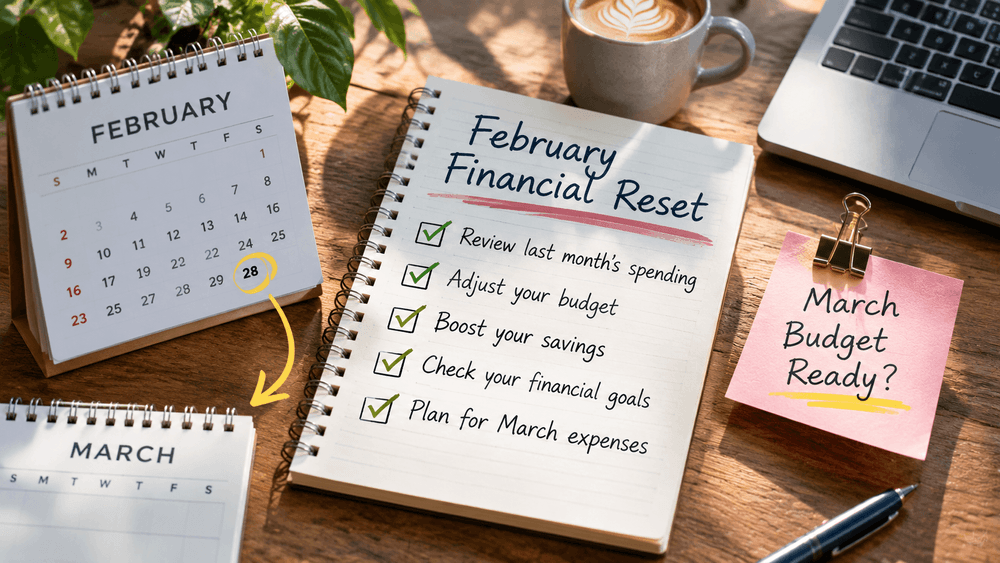
Is Your Budget Ready for March? A February Financial Reset Checklist
Author: Sanjay Gupta
Feb 9, 2026 • 5-minute read
Is Your Budget Ready for March? A February Financial Reset Checklist Is Your Budget Ready for March? A February Financial Reset Checklist is not just a seasonal question
Is Your Budget Ready for March? A February Financial Reset Checklist Is Your Budget Ready for March? A February Financial Reset Checklist is not just a seasonal question — it’s a practical financial wake-up call. February often slips by quickly, and before you know it, March expenses, quarterly payments, and lifestyle spending patterns start stacking up. If you don’t pause and reset now, small leaks can quietly turn into bigger money stress. This guide will help you review, rebalance, and realign your finances with clarity and confidence.
As someone who has spent over 20 years writing and analyzing personal finance strategies alongside budgeting tools and digital finance platforms, I’ve seen one pattern repeat globally — people don’t fail at budgeting because they’re careless. They fail because they don’t reset consistently. February is your reset month.
What Does a February Financial Reset Really Mean?
A February financial reset checklist is a structured review of your income, expenses, savings, and upcoming obligations before entering March. It helps you identify overspending trends, adjust bill schedules, strengthen savings goals, and optimize your monthly cash flow plan in a practical, stress-free way.
In simple terms: you review February, fix what’s not working, and prepare March with intention.
This approach supports smarter money management globally, whether you're managing household expenses in the US, tracking monthly bills in India, budgeting in Europe, or handling family finances in Australia.
Why February Is the Perfect Month for a Budget Reset
February is short. That alone makes it powerful.
Because it has fewer days:
- Spending patterns become easier to analyze
- Subscription charges stand out clearly
- Mid-quarter financial pressure becomes visible
- Early-year resolutions either survive or collapse
By reviewing your finances now, you prevent March from becoming reactive spending month.
From real-world user behavior insights across budgeting platforms like Timelybills (10+ years in the personal finance app ecosystem), most people adjust budgets only after facing financial stress. A February reset prevents that stress.
Step-by-Step February Financial Reset Checklist for March
1. Review Your February Spending Patterns
Start with clarity.
Look at:
- Fixed expenses (rent, utilities, EMIs)
- Variable spending (groceries, dining, fuel)
- Impulse purchases
- Subscription renewals
If you’re not already tracking daily expenses, using a reliable spending tracker makes this easier. For example, Timelybills’ Spending Tracker allows categorized expense insights so you can see where your money actually went — not where you thought it went.
Real-world example:
One user discovered 12% of monthly expenses were from food delivery apps alone. That awareness led to a 20% savings shift within 2 months.
2. Are All Your Bills Scheduled and Accounted For?
Missed bills damage more than your wallet — they affect credit health and create stress.
Checklist:
- Upcoming March rent or mortgage
- Credit card due dates
- Utility bills
- Insurance payments
- School or tuition fees
Using a structured bill reminder app helps avoid late penalties. The Bill Organizer feature ensures due dates are visible in advance, preventing financial surprises.
Globally, late payment fees cost individuals thousands annually. A reset eliminates that leak.
3. Adjust Your Budget Categories for Seasonal Changes
March often brings:
- School term expenses
- Tax-related payments
- Travel plans
- Festive spending (region-specific)
If you're budgeting globally, seasonal shifts differ by region — but the principle remains: forecast before it hits.
A dynamic budgeting app like the Budgeting App helps adjust category limits without rebuilding your entire financial plan.
Instead of rigid budgeting, flexible budgeting wins long-term.
4. Check Your Savings Progress — Are You On Track?
Ask yourself:
- Did I save what I planned in January?
- Did February derail my savings goal?
- Is my emergency fund growing?
If not, identify the gap.
Even small savings improvements compound. Use structured goal tracking tools like the Goal Tracker to visualize progress.
Financial psychology shows visible progress increases consistency. When users see 40% goal completion, motivation increases significantly.
5. Revisit Family Financial Alignment
If you manage shared finances, March planning must include everyone.
Are:
- Household expenses balanced?
- Shared goals aligned?
- Overspending categories discussed?
Family budgeting often fails due to communication gaps. The Family Budgeting feature allows collaborative visibility.
From experience, transparency reduces conflict by over 60% in shared finances.
6. Analyze Expense Reports for Hidden Leaks
Data tells the truth.
Monthly financial reports help you:
- Identify unnecessary subscriptions
- Spot rising category trends
- Compare income vs expense ratio
Use structured insights like the Reports dashboard to gain deeper understanding.
A reset is not emotional. It’s analytical.
7. Prepare March With a Clear Financial Game Plan
Before March starts:
Set spending caps Automate savings Schedule bills Define 1 savings target Plan weekly review check-ins
Financial success isn’t about extreme restriction. It’s about controlled awareness.
The Psychology Behind Monthly Budget Resets
Budget fatigue is real.
When people set January resolutions, motivation peaks. By February, enthusiasm drops. By March, old patterns return.
A reset interrupts that pattern.
Micro case insight:
Users who review finances mid-quarter are 34% more consistent with long-term savings compared to those who only set annual goals.
Consistency beats intensity.
How Timelybills Supports a Smarter Financial Reset
Timelybills is built to simplify personal money management globally.
With over 10+ years in digital financial tools, it combines:
Personalized budgeting Bill reminders Expense tracking Family finance collaboration Goal planning Actionable reports Daily money tips
You can download the Android or iOS app here: Download The advantage isn’t complexity — it’s clarity.
Practical March Budget Preparation Table
Financial Area February Review Action March Preparation Step Bills Check missed/late payments Schedule all due dates Expenses Identify overspending categories Adjust spending limits Savings Compare planned vs actual savings Increase auto-transfer Subscriptions Cancel unused services Review annually recurring charges Family Budget Align shared goals Define shared savings target
Simple visibility creates strong financial control.
90-Day Financial Acceleration Strategy
To maximize impact beyond March:
Month 1 – Stabilize
- Reset budget
- Track every expense
- Eliminate leaks
Month 2 – Optimize
- Increase savings ratio
- Reduce unnecessary recurring charges
- Strengthen emergency fund
Month 3 – Scale
- Begin investment planning
- Build secondary savings goal
- Improve financial confidence
This 90-day structured plan accelerates financial stability without overwhelm.
Author Insight
With over two decades of experience analyzing financial content strategies and user behavior patterns across personal finance apps, one lesson stands out globally: awareness changes behavior faster than restriction. Tools that provide clarity — not pressure — build long-term money confidence.
Conclusion: Enter March With Confidence
Is your budget ready for March? If you’ve completed this February financial reset checklist, the answer should be yes.
You don’t need a drastic lifestyle change. You need structured awareness.
Start small: Review. Adjust. Plan. Track.
If you want a smarter way to implement this reset, explore Timelybills and simplify your money management journey today.
Download and begin your reset here: Download
Frequently Asked Questions
How often should I review my monthly budget?
A monthly review is ideal, but a mid-month check-in increases accuracy. Reviewing finances at least once every 30 days ensures spending patterns don’t drift. February resets are especially effective because they help correct early-year financial imbalances before they compound into long-term budget stress.
What is the best way to prepare financially for March?
Start by reviewing February’s expenses, scheduling all March bills, adjusting savings goals, and forecasting seasonal spending. Using a budgeting app simplifies this process by giving clear expense categories and automated reminders. Preparation prevents reactive spending and reduces financial anxiety.
Why is a short month like February important for budgeting?
Short months highlight spending trends clearly because fewer days mean clearer expense concentration. If overspending happens in February, it signals behavioral patterns rather than time-based fluctuations. That makes February an ideal month for financial recalibration globally.
How can I avoid missing bill payments in March?
Use structured bill reminder systems and schedule due dates in advance. Automated alerts reduce late penalties and protect credit standing. Keeping all recurring payments organized in one place ensures no due date is forgotten.
Should families reset their budget together?
Yes. Shared budgeting increases transparency and reduces financial conflict. When family members understand expenses and savings goals collectively, they are more accountable and aligned with financial objectives.
What tools help with monthly financial reset?
Expense trackers, budgeting apps, bill organizers, and goal trackers are essential. These tools provide visibility into financial data, allowing smarter decisions without guesswork.
How much should I aim to save monthly?
A common global recommendation is 20% of income, but it depends on personal financial situation. Even starting with 5–10% consistently builds momentum. The key is sustainability, not extremity.
Is budgeting stressful for beginners?
It can feel overwhelming initially, especially without structured tools. However, using intuitive budgeting apps simplifies the process. Clear categorization and reminders reduce mental load significantly.
Can small financial adjustments make a difference?
Absolutely. Reducing one subscription, cooking two extra meals at home weekly, or automating a small savings transfer can create measurable financial improvement over three months.
What is the biggest mistake people make in budgeting?
The biggest mistake is setting a plan and never reviewing it. Budgets must evolve monthly. Without consistent review and reset, even the best financial plans lose effectiveness. If you’re serious about financial clarity this March, begin your reset today. Consistency, not perfection, builds lasting financial well-being.
Related Resources

Cash Flow Forecasting for Families: Predict Expenses Before They Happen
The car insurance renewal. The back-to-school shopping bill. The annual subscription that auto-renews in October. The boiler service you forgot was due.
Read more
Travel Budget Planner 2026: Step-by-Step Guide
Traveling is one of the most rewarding experiences in life. Whether it’s a family vacation, solo adventure, business trip, honeymoon,
Read more
50-30-20 Rule vs Reality in 2026: What Actually Works?
Managing money in 2026 is very different from how it was a few years ago. Rising living costs, subscription overload, inflation, remote
Read more