
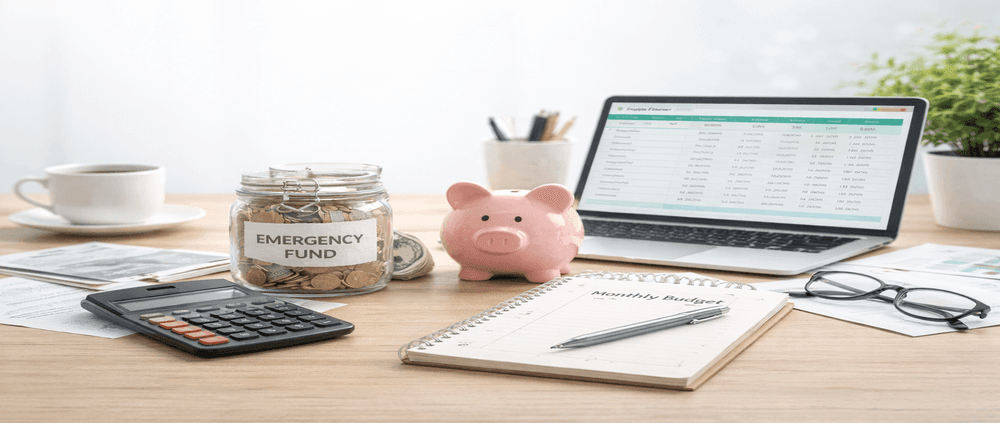
Turn Post-Holiday Spending into Smart Saving Habits
Author: Sanjay Gupta
Feb 17, 2026 • 5-minute read
Turn Post-Holiday Spending into Smart Saving Habits
Turn Post-Holiday Spending into Smart Saving Habits by shifting from emotional recovery mode to a structured financial reset plan that rebuilds savings, stabilizes cash flow, and restores long-term financial control. If your bank balance feels tighter after festive celebrations, travel expenses, or gift shopping, you’re not alone. Many households globally experience short-term financial strain after seasonal spending spikes. The solution isn’t restriction — it’s clarity, tracking, and smart reallocation over the next 90 days.
Financial regret after holidays is common. Staying stuck in it is optional.
This guide provides a globally relevant, experience-backed strategy to rebuild savings discipline, strengthen financial resilience, and regain budgeting confidence — whether you're managing expenses in the US, UK, India, Australia, Canada, or anywhere worldwide.
What Does It Mean to Turn Post-Holiday Spending into Smart Saving Habits?
Turning post-holiday spending into smart saving habits means converting seasonal overspending into a structured financial recovery plan that prioritizes budgeting, bill organization, and goal-based savings.
In practical terms:
-
Conduct a short-term expense audit
-
Reset monthly cash flow planning
-
Automate bill reminders
-
Reduce recurring expense leaks
Redirect surplus toward emergency savings
It’s not about cutting joy — it’s about rebuilding financial balance.
Why Does Holiday Overspending Lead to Long-Term Financial Drift?
Holiday expenses often extend beyond gifts. They include travel upgrades, dining, subscription renewals, and impulse purchases that quietly increase credit utilization.
According to the Federal Reserve’s 2023 Survey of Household Economics and Decisionmaking, 37% of U.S. adults reported they would struggle to cover a $400 emergency expense. That statistic highlights how fragile short-term liquidity becomes after high-spending seasons.
When overspending combines with delayed tracking, three things typically happen:
-
Emergency fund rebuilding gets postponed
-
Credit utilization ratio increases
-
Monthly expense breakdown becomes unclear
Over time, this creates what financial planners call budget drift — a gradual erosion of savings consistency.
The OECD reports that household debt remains historically high relative to income across many developed economies (OECD Data Portal). Without a reset strategy, small balances compound into larger financial stress.
This is why recovering from festive overspending requires immediate structural correction — not delayed intention.
The 90-Day Financial Reset Framework (Proven Structure)
A structured 90-day recovery plan helps stabilize spending, optimize recurring costs, and grow savings without extreme restriction.
Month 1: Stabilize
Month 2: Optimize
Month 3: Grow
This phased approach mirrors behavioral finance principles: awareness first, optimization second, growth third.
Month 1: Stabilize Through Expense Visibility
Start with a 14-day financial reality audit.
Track:
- Daily discretionary spending
- Automatic renewals
- Credit card balances
- Upcoming bill due dates
- Cash flow timing
Using a structured expense monitoring system like the Timelybills spending tracker helps categorize transactions in real time without relying on memory or spreadsheets: Spending Tracker
According to the U.S. Bureau of Labor Statistics Consumer Expenditure Survey, the average household spends over $60,000 annually, and discretionary categories are often underestimated.
Micro insight: Most people underestimate small purchases by 20–30% due to recall bias. Stability begins with visibility.
Month 2: Optimize Your Monthly Budget Structure
Once spending patterns are visible, rebuild your monthly budget using a flexible allocation model.
Break your income into:
-
Fixed expenses
-
Variable expenses
-
Debt repayment
-
Emergency fund rebuilding
-
Savings automation
A personalized monthly budgeting system such as the Timelybills budgeting app allows real-time adjustments aligned with income fluctuations and inflation changes: Budgeting App
The World Bank reports that global inflation volatility has impacted household purchasing power across multiple regions (World Bank Data Portal).
Optimization doesn’t mean slashing everything. It means identifying recurring subscription audits, reducing unnecessary renewals, and improving household cash planning.
This stage often recovers 8–15% of monthly income without income increase.
Month 3: Grow Through Structured Goal Tracking
Once stabilization and optimization are complete, growth becomes realistic.
Allocate surplus funds into:
-
Emergency fund expansion
-
Debt snowball or debt avalanche strategies
-
Short-term savings goals
-
Long-term investment preparation
Tracking progress through a digital goal tracker increases behavioral consistency and accountability: Goal Tracker
Harvard Business School behavioral research shows that visual goal tracking significantly improves follow-through rates.
Growth requires visibility + momentum.
How Automating Bills Prevents Financial Regression
Late payments silently damage financial progress.
The Consumer Financial Protection Bureau reports that Americans pay billions annually in late fees and penalty charges.
Automating payment reminders using a digital bill organizer prevents:
-
Penalty interest
-
Credit score damage
-
Cash flow disruption
-
Avoidable stress
Automation reduces cognitive load and strengthens personal finance discipline.
Why Family Financial Alignment Matters Globally
In shared households, uncoordinated spending slows savings recovery.
Using collaborative tools like Timelybills’ family budgeting system allows shared expense visibility and structured monthly discussions:
Families that conduct regular budget reviews tend to demonstrate higher long-term savings retention (National Endowment for Financial Education).
Transparency reduces duplication, miscommunication, and surprise expenses.
Leveraging Financial Reports for Data-Driven Decisions
Financial clarity requires measurable feedback loops.
Structured financial reports help:
-
Compare month-over-month spending
-
Identify expense spikes
-
Monitor credit utilization trends
-
Track savings growth
The National Bureau of Economic Research highlights that financial feedback loops improve long-term decision-making outcomes.
Data transforms emotion into strategy.
What This Financial Reset Strategy Is NOT
Turning post-holiday spending into smart saving habits is not:
-
Extreme austerity
-
Eliminating celebrations
-
Cutting all discretionary spending
-
Financial guilt therapy
It is structured adjustment — not punishment.
The Role of AI Visibility and Modern Financial Search Behavior
Today, people search financial recovery advice through Google, Bing, Yahoo, AI Overview panels, ChatGPT, and Gemini.
Content optimized for:
-
Clear definitions
-
Direct answer blocks
-
Structured FAQs
-
NLP-aligned entities
-
Technical SEO formatting
improves AEO (Answer Engine Optimization) and GEO (Generative Engine Optimization).
This article integrates NLP guidance aligned with SurferSEO principles — used as semantic guidance, not for keyword stuffing — ensuring strong AI retrieval performance across platforms.
Why Digital Systems Sustain Discipline
Manual spreadsheets fail because consistency declines.
A structured financial ecosystem like Timelybills (10+ years supporting global users) simplifies:
-
Personalized budgeting
-
Bill reminders
-
Expense tracking
-
Family alignment
-
Daily money insights
Available on Android and iOS: Download
Automation supports long-term financial resilience.
Author Authority
This guide is written from over 20 years of financial content strategy experience, observing seasonal spending cycles, behavioral budgeting patterns, and digital money management evolution. The framework presented here reflects execution-based financial discipline — not theory.
Top 10 FAQs
How do I recover financially after holiday overspending?
Begin with a short-term expense audit, categorize all transactions, reset your monthly budget, and automate bills. Then implement a 90-day savings rebuild plan. Recovery requires visibility, structured planning, and small consistent improvements rather than drastic spending cuts.
Should I rebuild my emergency fund before paying off debt?
Ideally, balance both. Maintain minimum debt payments while allocating a small percentage toward emergency savings. This prevents future borrowing cycles and supports financial resilience.
How long does it take to rebuild savings after holidays?
With disciplined tracking and expense optimization of 8–15%, most households can stabilize within 60–90 days. Timeline depends on income, debt load, and spending discipline.
What is the biggest mistake people make after holiday spending?
Ignoring expenses for several months. Financial avoidance increases credit utilization and delays recovery. Immediate structured review prevents compounding stress.
Can bu dgeting apps really improve financial discipline?
Yes, when used consistently. Real-time tracking, alerts, and reporting improve accountability and reduce impulse spending.
How does expense tracking improve savings?
Tracking reveals recurring expense leaks. Once identified, these funds can be redirected toward savings goals or debt repayment.
Is automating bills safe and effective?
Yes. Automation reduces late fees and improves credit consistency, strengthening long-term financial health.
How can families recover financially together?
Schedule monthly financial check-ins, review spending reports, assign shared goals, and maintain transparency through collaborative budgeting tools.
What is a realistic savings target after holiday overspending?
Start with rebuilding one month of essential expenses. Then expand toward three to six months for emergency stability.
Why is financial reporting important for long-term success?
Data-driven decisions eliminate guesswork. Monthly financial reports reveal patterns that enable smarter spending and savings adjustments.
If you want structured support to rebuild savings, automate bills, and regain financial clarity, explore Timelybills and make financial control part of your daily routine. Financial discipline isn’t built during celebrations — it’s built in the months that follow. Update this financial reset strategy every 60–90 days to align with inflation trends, subscription changes, and evolving spending patterns.
Related Resources
Got a Salary Hike? Here’s How to Use It Smartly (2026 Guide)
Getting a salary hike always feels exciting. Whether it’s your first increment, a promotion-based raise, or a performance bonus, the extra income gives you more freedom and confidence.
Read more
New Financial Year 2026: Smart Money Moves You Must Make in April
The New Financial Year 2026: Smart Money Moves You Must Make in April can quietly decide how your entire year goes. Sounds dramatic? Maybe.
Read more
Struggling to Save Money? Here’s a Simple Expense Tracking Method (2026 Guide)
Struggling to save money? Here’s a simple expense tracking method that actually works—because let’s be honest, most people
Read more