
Struggling to Save Money? Here’s a Simple Expense Tracking Method (2026 Guide)
Nikita Roy
9, March, 2026 1 min read
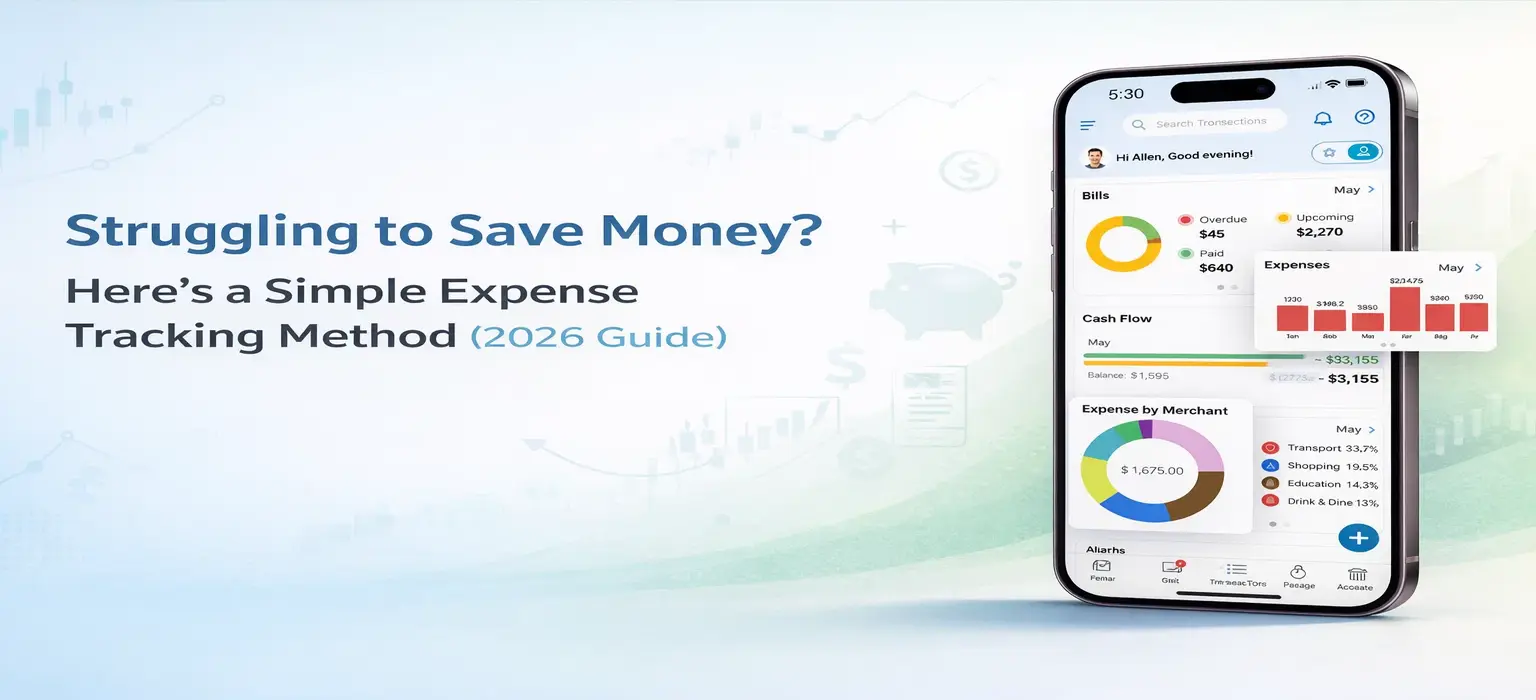
Struggling to save money? Here’s a simple expense tracking method that actually works—because let’s be honest, most people don’t fail at saving due to lack of income… they fail because they don’t see where their money is going.
And that’s the real problem.
You earn. You spend. You assume you’ll save “next month.” But somehow, that next month never comes.
So instead of complicated financial strategies, let’s simplify everything.
This guide will show you a practical, human-friendly expense tracking method you can start today—no confusion, no overwhelm.
Why Most People Struggle to Save Money
Before jumping into the method, we need to understand what’s going wrong.
Because saving money isn’t hard… but consistency is.
Here’s what typically happens:
- You don’t track daily expenses
- Small purchases go unnoticed
- Bills come as surprises
- Budgeting feels restrictive
And over time?
Money slips through the cracks
Most people in cities like Mumbai, Chennai, or Bangalore face this exact issue—especially with digital payments like UPI making spending effortless.
The Real Solution: Awareness Before Saving
Here’s something important.
You cannot save what you don’t track.
Simple.
Saving is not the first step. Tracking is.
Once you understand your spending patterns, saving becomes natural—not forced.
- The Simple Expense Tracking Method (That Actually Works)
- Let’s break it down into a method anyone can follow.
- No finance degree needed.
Step 1 – Track Every Expense for 7 Days
Start small.
Don’t try to track for a year. Just 7 days.
Record:
- Cash expenses
- UPI payments
- Card transactions
- Subscriptions
Yes—even that ₹50 tea or coffee.
Because those small expenses? They matter more than you think.
Use a simple tool to make this easier: Spending Tracker
Step 2 – Categorize Your Spending
Once you track, group your expenses into categories:
- Food & dining
- Transport
- Shopping
- Bills & utilities
- Entertainment
This gives clarity.
You’ll start noticing patterns like:
“Why am I spending so much on food delivery?” That’s your first breakthrough.
Step 3 – Identify Money Leaks
Now comes the eye-opening part.
Look for:
- Unnecessary subscriptions
- Frequent small spends
- Impulse purchases
These are your money leaks.
Most people don’t have a “big expense problem”
They have a “small leak problem”
Step 4 – Create a Flexible Budget
Don’t go extreme.
A budget should guide you—not restrict you.
Divide your income into:
- Needs (50%)
- Wants (30%)
- Savings (20%)
Adjust based on your lifestyle.
You can set up a smart budget here:Budgeting App
Step 5 – Set Bill Reminders
Missed bills = unnecessary loss.
Late fees are avoidable.
Set reminders for:
- Electricity
- Credit cards
- Rent Subscriptions
Organize all bills here:Bill Organizer
Step 6 – Track Weekly, Not Monthly
Most people check finances once a month.
That’s too late.
Weekly tracking helps you:
- Stay aware
- Fix mistakes early
- Adjust spending
Think of it like a health check.
Step 7 – Set Small Saving Goals
Don’t aim for ₹1 lakh immediately. Start with: Saving ₹5000 Cutting 2 unnecessary expenses Building a small emergency fund
Track your goals here:Goal Tracker
Step 8 – Review Your Financial Reports
Tracking is good. Understanding is better.
Reports show:
- Where money goes
- Which category overspends
- Monthly trends
View detailed insights here:Reports
Why This Method Works (Unlike Others)
Let’s be honest again.
Most financial advice fails because:
- It’s too complicated
- It’s unrealistic
- It’s not practical
This method works because:
- It starts small
- It builds awareness
- It creates habits
And habits = long-term savings
Common Mistakes to Avoid
Even with a good method, people make mistakes.
Watch out for:
- Skipping daily tracking
- Ignoring small expenses
- Being too strict with budgeting
- Not reviewing finances
- Relying on memory
Consistency matters more than perfection.
Real-Life Example (Simple but Powerful)
Let’s say:
Rahul earns ₹30,000/month.
Before tracking:
- No savings
- Frequent food orders
- Missed bill payments
After 30 days of tracking:
- Identified ₹4000 unnecessary spending
- Set a budget
- Saved ₹5000
Nothing changed in income.
Only awareness changed.
How TimelyBills Makes This Method Easy
Let’s be practical.
Doing all this manually?
- Not sustainable.
- You need a system.
TimelyBills helps you:
- Track expenses daily
- Set budgets
- Get bill reminders
- Analyze spending
- Set financial goals
Download here:Download
With 10+ years of experience, TimelyBills simplifies money management for users globally.
Who Should Use This Expense Tracking Method?
This method works for:
- Students
- Working professionals
- Families
- Freelancers
- Small business owners
Basically… Anyone struggling to save money
Future of Expense Tracking (2026–2030)
We’re moving toward smarter systems:
- AI-driven insights
- Automated expense tracking
- Predictive budgeting
The goal?
- Less effort
- Better decisions
Apps like TimelyBills are already moving in this direction.
Conclusion
Struggling to save money? Here’s a simple expense tracking method that proves one thing:
- You don’t need more income to save money
- You need better awareness and systems
Start small. Stay consistent. And over time… Saving becomes natural.
FAQs
Why am I struggling to save money even with a good income?
Many people struggle to save despite earning well because they lack visibility into their spending habits. Without tracking expenses, it’s easy to overspend on small, frequent purchases. Over time, these add up and reduce savings. The key is awareness through consistent expense tracking.
What is the easiest way to start tracking expenses?
The easiest way is to start with a simple method—track every expense for 7 days. Use a mobile app to record daily spending, categorize expenses, and review patterns. This helps build awareness and makes it easier to transition into long-term financial management.
How does expense tracking help save money?
Expense tracking helps identify where money is being spent unnecessarily. Once you recognize patterns, you can reduce wasteful spending and allocate more money toward savings. It creates discipline and improves financial decision-making over time.
Should I track expenses daily or weekly?
Daily tracking is ideal for accuracy, but weekly reviews are essential for analysis. Recording expenses daily ensures nothing is missed, while weekly reviews help identify trends and make adjustments. Together, they create an effective financial management system.
Can I save money without budgeting?
It’s possible, but not effective. Budgeting provides structure and direction for your finances. Without it, saving becomes inconsistent and unpredictable. A flexible budget helps you balance spending and saving while maintaining financial control.
What are the biggest mistakes people make in expense tracking?
Common mistakes include not tracking small expenses, skipping days, relying on memory, and not reviewing data regularly. These mistakes reduce the effectiveness of expense tracking and make it harder to build saving habits.
How long does it take to see results from expense tracking?
Most people start seeing results within 2–4 weeks. Initially, awareness increases, followed by better spending control. Over time, consistent tracking leads to improved savings and stronger financial discipline.
Is an expense tracking app necessary?
While manual tracking is possible, it’s not practical in the long run. An app simplifies the process by automating tracking, categorizing expenses, and providing insights. It saves time and ensures accuracy.
How do I stay consistent with expense tracking?
Consistency comes from simplicity. Use an easy-to-use app, track expenses immediately, and review weekly. Avoid overcomplicating the process. The easier it is, the more likely you are to stick with it.
Can this method work for families?
Yes, this method works well for families. By tracking shared expenses and setting joint budgets, families can improve financial coordination, reduce unnecessary spending, and achieve collective financial goals more effectively.

Download the app and get started on your money saving journey




© Copyrights 2026 TimelyBills. All rights reserved.