
Simple Billing System for Retail Shops (Step-by-Step Guide) – 2026
Author: Sanjay Gupta
Mar 23, 2026 • 5-minute read
Simple Billing System for Retail Shops (Step-by-Step Guide) – 2026
Simple billing system for retail shops—if you’re running a shop and still managing bills manually or loosely, chances are you’re losing money without even realizing it. Not in big amounts. Not all at once.
But through small mistakes… missed entries… delayed tracking… and billing confusion.
Here’s the truth most shop owners don’t talk about:
-
Billing is not just about generating receipts
-
It’s about controlling your entire business cash flow
So if you want better profits, cleaner records, and less stress, this guide will walk you through a simple, practical billing system you can actually implement—step by step.
Why Retail Shops Need a Proper Billing System
Let’s start with reality.
Most small retail shops:
-
Write bills manually
-
Don’t track daily sales properly
-
Mix personal and business money
-
Forget to record small transactions
And over time?
-
Profits become unclear
-
Expenses go out of control
-
Cash flow becomes unpredictable
-
A proper billing system fixes all of this.
What Is a Simple Billing System for Retail Shops?
A simple billing system is a structured way to:
-
Record every sale
-
Track expenses
-
Manage bills and payments
-
Monitor profits
-
It doesn’t have to be complicated.
In fact, the simpler it is… the more consistently you’ll use it.
Key Components of an Effective Billing System
Before jumping into steps, understand what your system should include:
1. Sales Tracking
Every transaction—cash, UPI, or card—must be recorded.
2. Expense Tracking
Shop rent, electricity, stock purchases… everything counts.
You can manage this easily here: Spending Tracker
3. Bill Management
Track due payments like:
-
Supplier payments
-
Utility bills
Organize all bills here: Bill Organizer
4. Budget Planning
Set limits on spending to avoid overspending.
Create budgets here: Budgeting App
5. Financial Reports
Understand:
-
Daily profit
-
Monthly trends
-
Expense patterns
View reports here: Report
Step-by-Step Simple Billing System for Retail Shops
Now let’s break it down into actionable steps.
Step 1: Record Every Sale (No Exceptions)
This is where most shop owners fail.
You might think:
“It’s a small sale… I’ll remember.”
You won’t.
Even ₹20–₹50 untracked sales add up over time.
Make it a rule:
-
Record every transaction immediately
-
Use categories if needed
Step 2: Separate Business and Personal Money
This is critical.
When money is mixed:
-
You don’t know actual profit
-
Expenses become unclear
-
Financial decisions suffer
Solution:
-
Use a separate account for business
-
Track only business transactions
Step 3: Track Daily Expenses
Expenses kill profits silently.
Common retail shop expenses:
-
Inventory purchases
-
Rent
-
Electricity
-
Staff salary
-
Track them daily to stay in control.
Step 4: Set Up Bill Reminders
Retail shops have recurring bills:
-
Supplier payments
-
Utility bills
-
Loan EMIs
Missing them leads to:
-
Penalties
-
Supplier issues
-
Cash flow problems
Set reminders here: Bill Organizer
Step 5: Create a Weekly Budget
Don’t wait for monthly budgeting.
Weekly budgets help you:
-
Control spending
-
Adjust quickly
-
Avoid overspending
Step 6: Review Sales and Expenses Weekly
This is where improvement happens.
Check:
-
Total sales
-
Total expenses
-
Profit margin
Ask yourself:
“Where am I overspending?”
“What can I optimize?”
Step 7: Use Reports to Make Decisions
Data = power.
Instead of guessing:
-
Use reports
-
Identify trends
-
Improve strategies
Check reports here: Reports
Common Billing Mistakes Retail Shop Owners Make
Let’s be honest… these mistakes are very common:
-
Not recording small sales
-
Ignoring expense tracking
-
No bill reminders
-
No financial reports
-
Relying on memory
Fixing these alone can increase your profits significantly.
Benefits of a Simple Billing System
Once you implement this, you’ll notice:
-
Clear financial visibility
-
Better profit tracking
-
Reduced losses
-
Improved cash flow
-
Less stress
And most importantly…
You’ll finally understand your business financially
How TimelyBills Simplifies Billing for Retail Shops
Let’s be practical.
Managing all this manually?
Not sustainable.
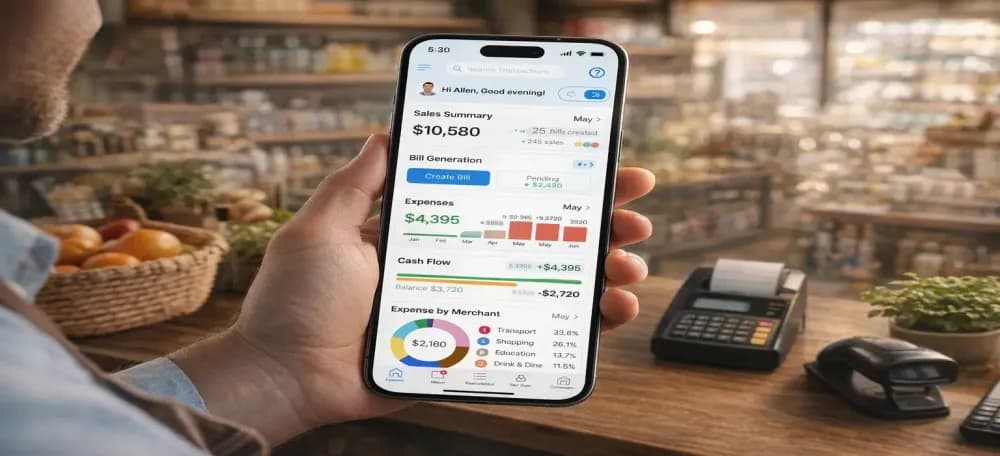
TimelyBills helps retail shop owners:
-
Track sales and expenses
-
Manage bills
-
Create budgets
-
Analyze reports
-
Set financial goals
Download here: Download
With 10+ years of experience, it’s designed to simplify financial management for real users.
Who Should Use This Billing System?
This system is perfect for:
-
Grocery shops
-
Small retail stores
-
Medical shops
-
Clothing stores
-
Local businesses
Basically…
Any shop that wants better control over money
Future of Retail Billing Systems (2026–2030)
Billing is evolving fast.
We’re moving toward:
-
Digital billing systems
-
AI-driven insights
-
Automated expense tracking
The goal?
-
Less manual work
-
More accurate financial control
Conclusion
A simple billing system for retail shops is not about complexity—it’s about consistency.
Track everything.
Review regularly.
Use the right tools.
And over time…
Your business becomes more profitable, stable, and stress-free
FAQs
What is the simplest billing system for retail shops?
The simplest billing system involves recording every sale, tracking expenses daily, setting bill reminders, and reviewing finances weekly. It doesn’t require complex software—just a consistent process and a reliable tool to manage transactions effectively.
Why do small retail shops lose money?
Most small shops lose money due to poor tracking of sales and expenses. Unrecorded transactions, missed bills, and lack of financial analysis lead to hidden losses. Over time, these small mistakes reduce profits significantly.
How can I track sales in my shop easily?
You can track sales by recording every transaction immediately using a mobile app or system. Categorizing transactions and reviewing them daily ensures accuracy and helps maintain financial clarity.
Is it necessary to separate personal and business finances?
Yes, it is very important. Mixing finances creates confusion and makes it difficult to calculate actual profit. Separating them helps maintain clear records and improves financial decision-making.
How often should I review my shop’s finances?
Weekly reviews are ideal. They allow you to monitor sales, expenses, and profits regularly. This helps identify issues early and make quick adjustments to improve business performance.
What are common billing mistakes in retail shops?
Common mistakes include not recording small sales, ignoring expenses, missing bill payments, and not reviewing financial data. These mistakes lead to financial leaks and reduced profitability.
Can a billing app help retail shops?
Yes, a billing app simplifies tracking, automates reminders, and provides insights. It reduces manual effort and improves accuracy, helping shop owners manage finances more effectively.
How do I improve profit in my retail shop?
Improving profit starts with tracking all income and expenses. Identify unnecessary costs, optimize spending, and ensure all sales are recorded. Regular analysis helps make better business decisions.
What is the role of budgeting in retail business?
Budgeting helps control expenses and allocate resources efficiently. It ensures that spending stays within limits and helps maintain a healthy cash flow in the business.
Is digital billing better than manual billing?
Yes, digital billing is more accurate, efficient, and reliable. It reduces errors, saves time, and provides better insights, making it easier to manage finances compared to manual methods.
Related Resources

How to Never Miss a Bill Payment Again: Complete Guide
How to Never Miss a Bill Payment Again: "Complete Guide" is a question millions of people ask every year. Whether it's a credit card bill, utility payment, mortgage, rent,
Read more
How to Structure a Weekly Bill Payment Routine Using an timelybills.app
How to Structure a Weekly Bill Payment Routine Using an timelybills.app is one of the simplest ways to stop missing due dates, reduce financial stress, and finally feel in control of
Read more
Easy Ways to Reduce Late Fees with Recurring Bill Reminders
Easy Ways to Reduce Late Fees with Recurring Bill Reminders start with one simple shift: stop relying on memory and start relying on structured systems
Read more