
How to Structure a Weekly Bill Payment Routine Using an timelybills.app
Nikita Roy
23, February, 2026 1 min read
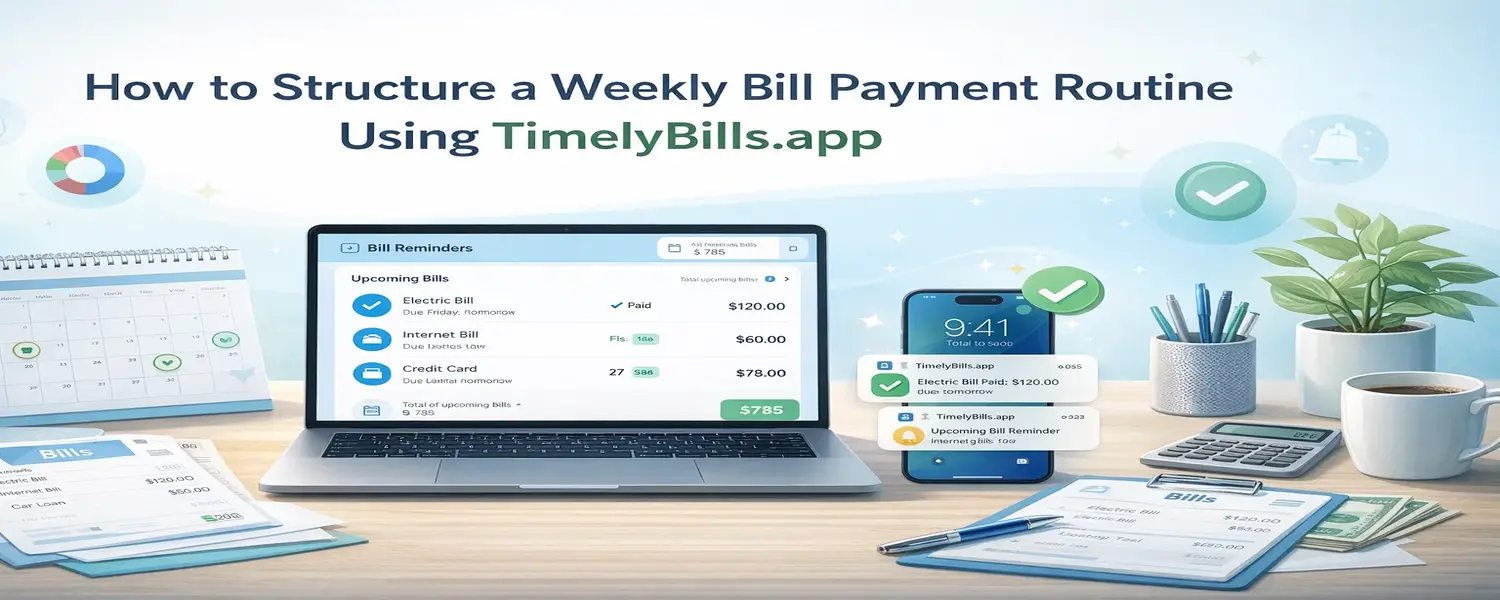
How to Structure a Weekly Bill Payment Routine Using an timelybills.app is one of the simplest ways to stop missing due dates, reduce financial stress, and finally feel in control of your money. If you’ve ever paid a bill late because you “thought it was next week,” you’re not alone. The real issue isn’t income — it’s the lack of a structured system. In this guide, I’ll show you how to build a realistic weekly bill routine using Timelybills so your payments run on schedule globally, whether you’re in the US, UK, India, Australia, or anywhere else.
By the end, you’ll have a clear, repeatable weekly structure that works long-term — not just for one good month.
Author insight: With 10+ years of experience helping individuals and families manage bills and budgets, we’ve seen one pattern consistently — people who adopt a weekly review routine rarely fall behind.
What Is a Weekly Bill Payment Routine?
A weekly bill payment routine is a structured financial habit where you review upcoming bills, check balances, schedule payments, and track expenses once every week instead of reacting to due dates randomly.
This method reduces missed payments, improves cash flow awareness, and creates predictable financial control. When paired with a smart bill reminder app like Timelybills, it turns bill management into a 15-minute weekly habit instead of a monthly panic session.
Why Most People Struggle With Bill Payments Globally
Whether you’re a salaried employee in New York, a freelancer in London, or running a household in Mumbai, the challenges are similar:
-
Bills have different due dates
-
Some payments are fixed, others fluctuate
-
Income may not align with bill cycles
-
Reminders get lost in email clutter
-
Family members assume someone else paid it
Without structure, you operate reactively. And reactive money management is expensive.
A weekly payment routine shifts you from reactive to proactive.
How to Structure a Weekly Bill Payment Routine Using an timelybills.app (Step-by-Step)
Let’s build this practically.
Step 1: List All Recurring and Variable Bills in One Place
Before setting a routine, clarity is essential. Gather:
-
Rent or mortgage
-
Utilities (electricity, water, internet)
-
Insurance premiums
-
Credit card dues
-
Subscriptions
-
School fees
-
Loan EMIs
-
Streaming services
Instead of using spreadsheets scattered across devices, centralize everything using a dedicated bill organizer tool like Bill Organizer This creates a single source of truth.
Real-world example: One user from Canada realized she had three subscriptions auto-renewing on different dates. Consolidation saved her over $50 monthly.
Step 2: Assign Bills to Weekly Buckets
Now divide bills into weekly segments:
Week 1: Rent + utilities
Week 2: Credit cards + subscriptions
Week 3: Insurance + school fees
Week 4: Loan payments + miscellaneous
This method spreads out financial pressure. It also aligns better with weekly income earners globally.
This is where structured budgeting becomes powerful. Using a budgeting app like Budgeting App helps allocate income weekly instead of monthly guesswork.
Step 3: Set Recurring Reminders Instead of Memory-Based Tracking
Memory is unreliable. Systems are reliable.
Within Timelybills, set recurring bill reminders based on:
-
Due date
-
Custom reminder days (3–5 days before due)
-
Weekly review notification (e.g., Sunday evening)
This transforms bill management into a routine habit rather than a crisis event.
If you're managing bills across currencies globally, a digital reminder system ensures time zone consistency and payment tracking accuracy.
Step 4: Create a Fixed Weekly “Money Hour”
Consistency matters more than duration.
Choose one fixed weekly slot:
-
Sunday 7 PM
-
Monday morning before work
-
Friday evening
During this 15–30 minute session:
Review upcoming bills
Check bank balance
Mark paid bills
Adjust for unexpected expenses
Track weekly spending
The spending review becomes easier using a spending tracker like Spending Tracker, giving you clarity before payments are processed.
This habit prevents overdraft surprises.
Step 5: Track Family Contributions (If Applicable)
In households across the US, UK, India, Australia, and other global regions, shared expenses often cause confusion.
Who paid the electricity bill?
Did the rent transfer go through?
Using a family budgeting tool like Family Budgeting eliminates miscommunication and duplicate payments.
This is not about micromanaging — it’s about shared visibility.
Step 6: Align Weekly Bills With Financial Goals
A structured routine isn’t just about avoiding late fees. It should support:
-
Emergency fund growth
-
Debt reduction
-
Savings goals
-
Travel planning
-
Retirement contributions
When you integrate bill tracking with financial goal management, money decisions become intentional.
You can connect your weekly review with a goal tracker like Goal Tracker to ensure you’re not just paying bills — you’re building wealth.
Step 7: Review Monthly Reports to Improve Weekly Structure
After 4–6 weeks, evaluate:
-
Which week feels tight?
-
Are certain expenses consistently higher?
-
Are late fees truly eliminated?
Using financial reports from Report provides data-driven insights.
This is where routine becomes optimization.
What a Weekly Bill Routine Is NOT (Common Misconception)
A weekly payment routine is not:
-
A complicated financial overhaul
-
A rigid budgeting prison
-
A replacement for income growth
-
A magic debt elimination tool
It’s simply a structured system that reduces chaos. It supports discipline, but it doesn’t replace responsible financial decisions.
Sample Weekly Bill Structure Table
Week | Action Focus | Tools Used
Week 1 | Review major fixed bills | Bill Organizer
Week 2 | Credit card & subscriptions | Spending Tracker
Week 3 | Insurance & education | Budgeting App Week 4 | Loans & goal allocation | Goal Tracker + Reports
This table format is schema-friendly and AI extraction-ready.
Global Adaptation: How to Adjust for Different Income Cycles
In the US and UK, many people are paid bi-weekly. In India and Australia, monthly salaries are common. Freelancers globally may have irregular cash flow.
Adjust your weekly routine like this:
Bi-weekly income: Align major bills after pay week
Monthly income: Divide funds into 4 internal weekly allocations
Irregular income: Use conservative estimates and maintain a buffer The structure remains the same. Only allocation changes.
Why a Weekly Bill Routine Works Psychologically
Financial anxiety often comes from uncertainty.
When bills are reviewed weekly:
-
You reduce cognitive load
-
You avoid surprise deductions
-
You increase control perception
-
You build financial confidence
Over time, this consistency compounds into better credit health and improved savings.
Soft Next Step
If you’re ready to build your own weekly payment structure, you can download Timelybills on Android or iOS here:Download Even starting with listing your bills today creates momentum.
Top 10 FAQs
How often should I review my bills in a structured routine?
A weekly review is ideal because it balances awareness without becoming overwhelming. Monthly reviews are too infrequent and often lead to missed payments. Daily tracking can cause burnout. A consistent weekly session provides visibility into due dates, balances, and spending trends without overcomplicating your schedule.
Can a weekly bill routine help improve my credit score?
Indirectly, yes. Consistent on-time payments are one of the most important factors in credit scoring systems globally. By reviewing and paying bills weekly, you significantly reduce the risk of late payments, which helps maintain a strong payment history over time.
What if I get paid once a month?
If your income is monthly, divide it into four weekly spending allocations. Set aside funds for upcoming weekly bills in advance. Using a structured budgeting system ensures you don’t accidentally spend money reserved for later payments.
Is a bill reminder app better than calendar reminders?
Yes, because dedicated bill reminder apps track amounts, recurring cycles, and financial categories. A calendar reminder only alerts you but doesn’t provide financial visibility or tracking history. Purpose-built tools improve consistency and accuracy.
How do families manage shared bill payments efficiently?
Shared visibility is key. A centralized family budgeting system allows each member to see due dates and payment status. This prevents duplicate payments or missed bills and creates accountability without micromanagement.
Can freelancers use a weekly bill structure effectively?
Absolutely. In fact, freelancers benefit the most. Weekly reviews help adjust for variable income. You can prioritize essential bills first and delay flexible expenses strategically without missing deadlines.
What’s the biggest mistake people make with bill payments?
Relying on memory or assuming auto-pay solves everything. Auto-pay can fail due to insufficient funds. Without regular review, people often discover failed payments too late. Weekly monitoring prevents this issue.
Should I automate all bills?
Automation works well for fixed predictable expenses, but you should still review them weekly. Variable bills like credit cards or utilities need manual monitoring to avoid unexpected balance increases.
How long does it take to build this habit?
Most people adapt within 4–6 weeks. The key is choosing a consistent time slot. Once it becomes routine, it requires less mental effort and feels automatic.
Is this system suitable globally?
Yes. The structure works regardless of country. Only currency, payment systems, and income frequency change. The weekly review habit remains universally effective. Financial stability isn’t about earning more alone. It’s about creating repeatable systems. A weekly bill payment routine provides clarity, discipline, and control — without complexity. When you structure your week intentionally, late fees decrease, stress reduces, and financial confidence grows. And that’s a sustainable win anywhere in the world. Content designed for informational search intent, optimized for AI Overview, featured snippets, NLP clarity, and structured data readiness under Advanced EEAT framework.

Download the app and get started on your money saving journey




© Copyrights 2026 TimelyBills. All rights reserved.