
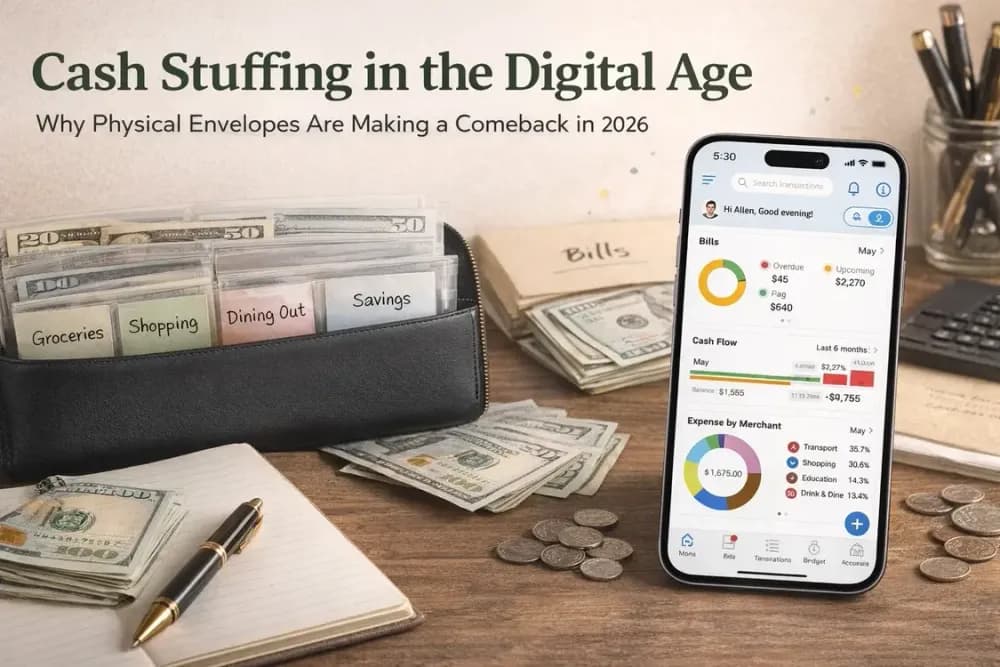
Cash Stuffing in the Digital Age: Why Physical Envelopes Are Making a Comeback in 2026
Author: Sanjay Gupta
Jan 19, 2026 • 5-minute read
Cash Stuffing in the Digital Age: Why Physical Envelopes Are Making a Comeback in 2026
Cash Stuffing in the Digital Age begins with a feeling most of us forgot we needed—the faint rasp of paper envelopes, the weight of cash counted twice, the quiet certainty that money placed is money spent with intention. Then comes 2026: contactless taps, invisible subscriptions, one-click everything. Our wallets are thinner, our statements longer, and our brains—wired for consequence—are rebelling against a system that removed friction entirely.
What looks like nostalgia is actually neuro-economics. The envelope method didn’t return because people distrust technology. It returned because humans distrust invisibility.
The Comeback Nobody Predicted—but Everyone Feels
Digital finance promised efficiency. It delivered speed. What it quietly erased was tactile budget feedback—the psychological signal that says, “This is real.” As payments dematerialized, overspending normalized. Enter the resurgence of cash stuffing across social platforms in 2024–2025, a trend driven by creators who reintroduced friction as a feature, not a flaw.
This isn’t anti-tech. It’s anti-blindness.
The Psychology of Friction: Why Swiping Is Failing Your Savings
Neuro-Economics of Spending
Friction slows behavior. Slower behavior invites reflection. Reflection curbs impulse. That’s the chain.
When you swipe, you bypass the pause. When you hand over cash, you feel the loss. Studies in behavioral economics have long shown that people spend more with cards than cash. The reason isn’t math—it’s sensation. Cash engages more senses, anchoring value in the body.
Short version: less friction equals more regret.
Tactile Budget Feedback vs. Digital Invisibility
Cash stuffing forces a decision before the spend. Digital systems often report after the damage. That temporal mismatch is why envelope budgeting feels powerful—and why digital tools must evolve to replicate it.
Beyond the Paper: Integrating the Envelope System Into a Modern Stack
Digital Cash-Flow Compartmentalization
The envelope method works because it compartmentalizes money by purpose. Groceries aren’t rent. Dining isn’t savings. The human brain loves categories.
Modern finance can—and should—mirror this logic without the risk of carrying cash. That’s where Personalized Budgeting becomes essential, allowing users to recreate envelope boundaries digitally with clarity and control. TimelyBills approaches this with intent, not gimmicks, through its budgeting framework: Budgeting App
Real-Time Visibility Without the Anxiety
Visibility doesn’t have to be overwhelming. It has to be timely. Envelope users check balances constantly because the system invites it. Digital tools often bury insight in menus. Real-time visibility—spend-by-category, moment-by-moment—restores awareness without shame or noise. TimelyBills’ spending view is built for this exact need: Spending Tracker
Punchline: awareness changes outcomes.
The 2026 Reality: Automation Where It Matters, Friction Where It Counts
Automated Bill Management as a Cognitive Offload
Cash stuffing never handled bills well. Rent, utilities, insurance—automation wins here.
The modern evolution is hybrid: tactile intent for discretionary spend; precision automation for obligations. Automated Bill Management removes missed payments and late fees while preserving mental energy for choices that matter. TimelyBills integrates this seamlessly: Bill Organizer
This is low-friction financial management done right.
The Collective Household Economy
Families don’t budget as individuals. They budget as systems.
The envelope method struggled at scale—multiple earners, shared goals, competing priorities. Digital evolution fixes this. The Collective Household Economy demands shared visibility, role-based access, and consensus. TimelyBills’ family features address the reality of modern households: Family Budgeting
Transparency reduces conflict. Structure builds trust.
From Mumbai to Manhattan: Why Tangibility Is Universal
From the high-tech hubs of London and New York to the cash-reliant markets of Mumbai and Lagos, the need for budget tangibility is universal. Culture changes tools. Biology doesn’t.
In cash-heavy economies, envelopes remain practical. In card-dominant cities, digital envelopes restore sanity. The mechanism is the same: make money visible, purposeful, and finite.
Financial Milestones Need More Than Motivation
Turning Intent Into Progress
Savings goals fail when they’re abstract. Envelopes succeed because they’re concrete.
Digital tools must visualize progress the same way. Financial Milestones—emergency funds, vacations, debt freedom—become achievable when broken into visible compartments. TimelyBills’ goal system does exactly that:Goal Tracker
Momentum beats motivation.
Deep Data Visuals Without the Spreadsheet Headache
People don’t need more data. They need meaning.
Envelope budgeting shows what’s left. Modern users need trends, projections, and clarity without Excel fatigue. Deep Data Visuals translate behavior into insight, closing the loop between action and outcome. TimelyBills’ reporting is built for humans first: Reports
Why TimelyBills Is the Evolution, Not the Replacement
TimelyBills didn’t chase trends. It absorbed lessons.
With over a decade of experience across Android and iOS, the platform understands that tools don’t change behavior—feedback does. It replicates the tactile satisfaction of envelopes through digital boundaries, real-time alerts, and intentional friction where overspending begins.
Control isn’t about restriction. It’s about design.
Taking Control Without Going Backward
You don’t need to abandon technology to reclaim control. You need better technology.
TimelyBills is built for those ready to evolve the envelope method—without cash risk, without guesswork, without shame. Start here: Download
People Also Ask
Is cash stuffing safe in 2026?
Cash stuffing carries inherent risks in a modern world—loss, theft, and lack of recovery. While the method is psychologically effective, its physical form is fragile. Digital implementations that replicate envelope boundaries without physical cash provide the same behavioral benefits with significantly improved safety, auditability, and recovery options.
Why are physical envelopes psychologically effective?
Physical envelopes introduce friction and tactile feedback. Handling cash activates loss aversion and conscious decision-making, reducing impulsive spending. This is rooted in neuro-economics, where sensory engagement increases perceived value and accountability compared to abstract digital transactions.
Digital vs. physical envelopes: which is better?
Physical envelopes excel at awareness but fail at scale and security. Digital envelopes excel at automation and reporting but often lack friction. The optimal approach blends both—digital systems that intentionally reintroduce boundaries, visibility, and pauses where spending decisions occur.
How does TimelyBills replicate cash stuffing digitally?
TimelyBills uses category-based compartmentalization, real-time spend tracking, alerts, and goal boundaries to mirror envelope logic. Users see what’s available before spending, not after, preserving the core psychological benefit of cash stuffing without physical limitations.
Is cash stuffing effective for high incomes?
Yes—perhaps more so. Higher incomes often increase discretionary leakage. Envelope logic scales by percentage, not amount. Digital tools allow high earners to maintain intentional boundaries while automating complex obligations, something physical systems struggle to manage.
Can families use envelope budgeting together?
Traditional envelope systems struggle with multiple contributors. Digital platforms designed for shared visibility allow families to collaborate, align priorities, and reduce conflict. Shared dashboards and permissions transform budgeting into a collective process rather than a personal burden.
Does friction slow financial progress?
Healthy friction prevents mistakes; excessive friction prevents action. The goal is selective friction—pauses at decision points, automation elsewhere. This balance accelerates progress by reducing regret, reversals, and burnout.
Is cash stuffing just a social media trend?
The trend amplified awareness, but the behavior addresses a structural problem in digital finance: invisibility. Trends fade; cognitive needs persist. That’s why the method keeps resurfacing across cycles and platforms.
How does real-time tracking improve budgeting?
Real-time tracking aligns awareness with action. When users see category balances before spending, they self-correct naturally. Delayed reporting often triggers guilt rather than adjustment, reducing long-term adherence.
Why choose TimelyBills over new budgeting apps?
Longevity matters. TimelyBills brings over ten years of iteration, user behavior data, and cross-platform refinement. It wasn’t built to look good in screenshots—it was built to change outcomes.
Cash stuffing survived a century because it respected how humans actually behave. TimelyBills exists because technology finally learned the same lesson.
Related Resources

Got a Salary Hike? Here’s How to Use It Smartly (2026 Guide)
Getting a salary hike always feels exciting. Whether it’s your first increment, a promotion-based raise, or a performance bonus, the extra income gives you more freedom and confidence.
Read more
New Financial Year 2026: Smart Money Moves You Must Make in April
The New Financial Year 2026: Smart Money Moves You Must Make in April can quietly decide how your entire year goes. Sounds dramatic? Maybe.
Read more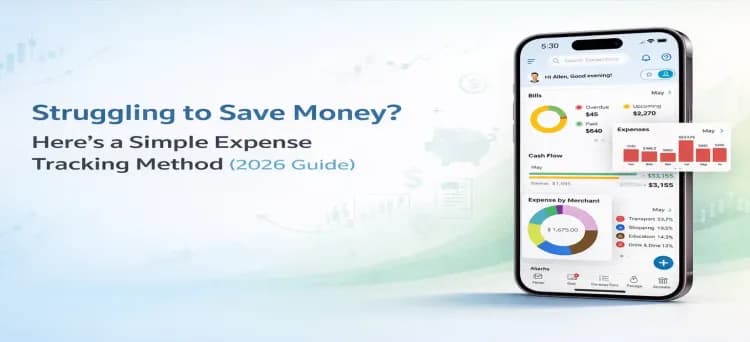
Struggling to Save Money? Here’s a Simple Expense Tracking Method (2026 Guide)
Struggling to save money? Here’s a simple expense tracking method that actually works—because let’s be honest, most people
Read more